Saturday, October 2, 2010

Fashion on a Rooftop


I got the nice chance to support JZ Couture with a few pics of their current collection.

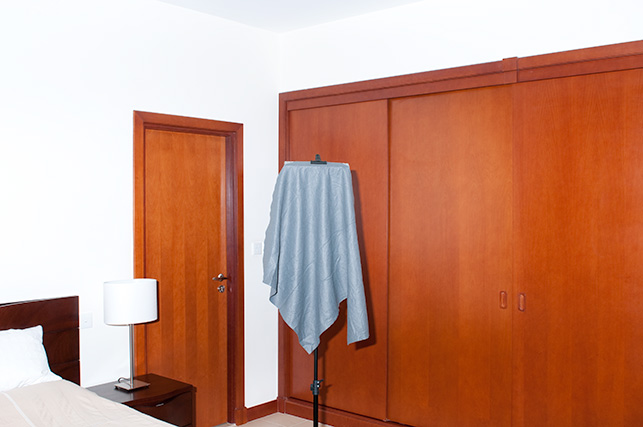
The Flash set up was a mix of SB800, SB900 and a Metz 45er.The basic set up can be seen in the following picture:


I used three SB 800 all set to SU-4 Remote Mode and Manual. All of them were for most of the time on full power. I used two umbrellas in lieu of a proper soft box.

One SB900 was on top of the camera and acted as commander in SU4 mode in Manual and doubled as fill light. Most shots were taken in Portrait orientation and I turn the Camera so that the flash is on the Opposite side from the main flash assembly. The fill flash setting was varied depending on my distance from the model and was between 1/8 and 1/32. I really like the distance display on the SB 900 it is an good help to get the right setting.

The red glow in the background was produced by a Metz 45 CT5 set to manual and triggered with a simple Metz remote cell (Mecalux 11).

The camera was set to manual.

My workflow is as follows:

1) Get the perspective right.
Select the lens, the right place to be for the photog and the model. I usually take some test shots of the scene at this step. And ensure that the manual setting is about right for the ambient scene. I usually start with 1/250 and the aperture indicated by the exposure meter of the Camera Matrix metering. (Matrix as this is the setting for the background)

2) Main light and fill
Set up the Main light and place it so light the model at the spot chosen in step 1. Again Test shots
The level of main light and aperture are chosen so that the main light is about 1 step higher than the ambient. (close the aperture one stop from the value determined in one, and bring enough light in the main light to be OK. (Now you know why there are three SB800.)
The fill is then seasoned to flavour between 1/4 and 1/16 depending on your distance to the model. I like the fill to be around 1 stop below main light. Test shots.


I expected strong colors in the dresses and went for colorful lighting.
In this test shot the ambient and main are set. The flashes have all 1 CTO gel and the camera WB is set to tungsten.


3) Add any background light as per your taste. The red filtered 45er gave me a dramatic light on the building structure and a glow in the lift doors. As it lights the background the intensity is set by placing it nearer or farer. In practice I found that these kind of background lights are no hassle as they can be left at the same setting and do not need to be disturbed if you or the Model moves.

4) As the light fades the time is adjusted downwards to keep the ambient at the desired level. Once the sun has set and the intense blue sky appears, there is quite a latitude to get lighter or darker skies by playing with the time setting.

5) I tried to direct the Model in a way so that she is at a fairly constant distance from the main lights. If that is not possible for a specific pose I adjust the aperture to compensate. (Do not forget to adjust the time accordingly if constant background exposure is desired.

6) In case of step 5 or in case of just me taking a different shooting angle the fill flash needs to be adjusted as described above.

I love to have the constant changing ambient light and go through different light settings and moods. Unfortunately the light moves fast near the equator and our blue hour is more like twenty minutes.

Also in Dubai there is every day a breeze that picks up at around dawn, which is generally nice for all residents, but evil in terms of setting up lighting equipment at the time. My best solution so far can be seen in the set up shot above. Three of the big (5l) water bottles just about seem to do the necessary to keep one light stand stable. Cheap, effective and reusable.


Overall I was happy with the set up. There were no misfires of the SB800 and the Metz let me only down when the battery was weak and the recycling times got too long. A quick change solved the problem.

One of the examples without the red background flash.


The second evening we started a bit earlier. The day has been hazy but the light in evening was nice and soft. I wanted to have more subdued colors. No gels and WB kept to daylight. The background with a green fl gel.


For this shot no background lights no ambient, just main light and fill.
With enough light the gray park deck surface becomes nice and light.


This is one of my personal favorites. I used the same main lights, but from the "wrong" side. So that the shoot through umbrellas are used like normal reflective ones. Very nice soft light. I also used the fantastic Nikon 105 mm 2.0 DC for this shot. I just love the crisp sharpness of the lens coupled with very nice bokeh.


Honestly a great experience and much more fun than test exposures of flash.
However the flash experiments and sporadic research must continue.
They will continue!

Thursday, September 23, 2010

Raw Power


This picture was taken mid afternoon in Dubai, with the sun about half high in the sky. The flash power needed in this circumstances is no mean feat, if an umbrella is used. The aperture was relatively open at 6.3 because I used a Polarizer to soak up light and smoothen the skin tones. The main light comes from a shoot through umbrella with three Metz 45 at manual full power. The fill light was an on camera SB 900 set to manual 1/32 which also triggered the Metz Set up.


The three flashes assembled with their brackets. All of them had the diffuser on, and were set to full Manual Output.


I used three photocells to trigger them individually, because I used three different models. CT-1, CT-4 and CL-4 digital. I did not want the three different models with very different Voltages to be wired together. Therefore one cell for each.
!!!! Caution !!!! If you connect a CT-1 and a low voltage model to the same cell electronics might be damaged!


The main question I want to explore today is the one of multiple flashes used to get a stronger output. Joe Mc Nally's Christmas Tree like set up with many SB-800 and SB-900 are legendary.
However there is physics to be considered. Combining two flashes does NOT result in double the guide number. Because light fall off in square relation to distance one needs a the power of 2 of number of flashes. Therefore to double the guide number (effectively double the distance)  FOUR units are needed. To quadruple the guide number SIXTEEN units are needed.

There is a German website http://www.plainpix.com/fototools.php which has a number of tools to easy calculate some photographic relations. On the bottom of the page is a tool where one can give in the guide number of combined flashes and the overall guide number is calculated.

Below is a table with Guide Numbers for additional flash units used. (Guide Number for ISO 100 in meters at 35 mm)
Flashes SB 800 SB 900 Metz 45
1383445
2544864
3665978
4766890
58576101
69383110
710190119
810796127

Looking at the table there are a few interesting observations.
1) For each additional unit added the actual increase in guide number gets less and less. The second SB 800 adds 16 to the overall guide number. The eighth adds only 6. The conclusion is that the "many small light" build up has its limitations and the point where it becomes really impractical is quickly reached.
2) Comparing models in the table one realises that maximum initial power is desirable in such a set up. For a guide number of 90 one needs 4 Metz 45ers compared to 7 SB900.
3) Big Stobes are really more practical from a point. 500 Ws = GN 85, 1000 Ws = GN 120, 1500 = GN 150. Comparing price and bulk the big ones are worth a consideration if a high power light output is needed. To replace one 1500 Ws big flash 16 SB900es would be needed.
Huh? Isn't that contrary to the whole carry less equipment story that started the strobist movement?
Well a full fledged big flash set up with 2 to 3 lights is much more bulkier than 3 or even 8 small flashes. The many small flashes are also more versatile in distributing them. And most of the time when full power output is not needed the small flashes do the same job as a big one with a weight advantage comparing light to light.
However when Raw power is needed the big ones come to the forefront.
Back to the picture above. The three Metz 45 have a raw GN of 78. With 200 ISO , 1.7 meter distance that would amount to an Aperture 64. The light loss in the shoot throough umbrella of roughly two stops brings us to Aperture 22. A further two stops of loss for the polarizer and we arrive at 11. The wide angle diffusers bring us to about 8. Close enough to the aperture found by test shots.
The sky is in the direction against the sun and is still very, very bright. Closing the aperture further to get the sky darker would have needed quite a bit more light.
So how far can I go by using all my available flash units fired together? 2 x SB900, 4x SB800, 2 x Metz 54-4, 6 x Metz 45 Total =152 I have not tried that yet. There will be another sunny weekend in Dubai.

Saturday, September 11, 2010

Batteries or Rechargeable


The intro picture has nothing to do with today's experiment except that I used batteries in the SB 900. Normally one tries to avoid a sharp shadow from the flash but in this picture I wanted the shadow to repeat the form of the sculpture on the little tower. The picture was taken in the castle of Gruyere/Switzerland . The sculpture is from the artist HAFIS. The old White balance and gel the flash technique is much stronger here due to the rusty surface.


Now back to on topic: The Metz 45ers get their power from one of three sources: A battery cage or a rechargeable pack that are inserted in the bottom of the grip, or and external battery pack.
Today we look at the internal sources only and ignore the external packs for the time being.

The flashes are delivered either with a battery cage to be filled with 6 AA (or mignon) cells. Some versions are delivered with a Metz rechargeable pack where 6 rechargeable cells are in a pack cage and a dedicated recharger. The individual rechargeable cells of the rechargeable pack can normally not be changed or taken out by the user.

Now we all know that the old NiCD rechargeables are a pain in the ass. They need constant fussing about, care and maintenance to work properly. So they have not been very practical for anyone without a full time assisitant, to whom to delegate charging and de-charging the packs once in a while and re-charing them at the right time. Whenever you wanted to do some shots at the spur of the moment the packs were not fully charged. Charging on top of the current charge provoked memory effect, which had to be healed later with days of charging and uncharging.
A complete un-charging and re-charging took 4 hours at best.

For most hobbyists the rechargebale pack went inbto the closet and the flash was operated with batteries in the battery cage. 2000% less hassle.

Later the NiMH rechargeables and the eneloops (like NiMH but hold the charge longer) came to market which made life a lot easier. Many people used a electronic charger like from Ansmann with 6 loading bays and one or two sets of NiMH or eneloops and popped them into the battery cage and went from there.

However (there seems to be always a however) the flash units have 3 pins in the power bay and the connection pins from the battery cage and the rechargeable pack are different.

There has been endless debate in many forums if it makes a difference in practice to put your rechargeables into a battery cage. Some people have posted nice instructions on their blogs how to dissect an old Metz Rechargebale pack with NiCd cells and replace them with Eneloops. Of course that has the drawback that you will habce to get a new charger as well, and it needs to be a charger that can charge the cells when they are connected in a row together (in the pack).

One nearly spooky aspect of Metz as a company is their efficient customer service. Ask any question on their website and you will receive an answer normally within two business days that not only answers your question but also some taht might be connected and for good measure throws in all manuals in pdf of all parts that were mentioned. I don't know how they keep up that stellar performance in this day and age, but way to go Metz!

The customer service is cited of explaining that older models suffer from less power, when rechargeables are used in the battery cage, newer models have a new electronic and it doesn't matter anymore. Still many posters in the forums insist that they do not see a difference in practice.

The reason for the two seemingly contradictory statements is simple. As explained earlier, one of the big advantages of automatic flash is, that the "unused" power is stored for the next shot. So if you have a realtively large aperture like 4 or 2.8 and shoot in Automatic or TTL mode, the flash might only use 20% to 50% of its power depending on distance and subject. So if the "fully" loaded flash has only 95% instead of 100% power, one might never notice.

However I intend to do experiments later on where we test limits of automatic flash and compare the 45ers to the modern hardware, I would like to know, if there is a difference in the flashes I own and how much is the difference.

And that brings us to today's experiment:


Three battery cages with: left fresh batteries, middle NiMH freshly re-charged, but well used and on the right the new NiMH recently bought and charged and no longer fully charged. Kind of a usual mix that can be found in any Hobby Strobist's bag.

Not in the picture but also used is a Metz NiMH pack (from 2009).


First I determined the current voltage of all packs:

The batteries gave 9.5V which is 6x 1.6 not unusual for fresh out of the pack.


The older NiMH gave 8.1V which is 6x1.35 again higher than nominal but not unusual fully charged.


The newer NiMH gave 7.85V which is 6x1.31, still well above nominal.


The Metz Pack gave also 8.1. Notice the difference in contact pins.


The set up is as follows:

- I tested three different flash types 45 CT5, a 45 CT4 and the newest 45 CL4 digital.

- The flashes were connected to my D300s (all of them are safe, I measured the trigger voltage) shooting a corner of a room. The motive is a grey felt cloth clipped to a light stand.

-Each flash is fired with full power in manual mode, the output is measured by a Gossen Lunasix used as flash meter.

-Ambient light is very low, curtains are drawn. The ambient light measurement would have been 1/4 second at f4 as determined by the camera.

- The camera is set to 1/60 and f/11 as determined by a flash meter reading, which is 7 stops above ambient level. A test shot without flash at this setting is completely dark (not shown)

- The camera and the light meter are set to ISO 200.

- Absolutely unnecessary as we will shoot full manual the flashes are also set to ISO 200. Just for fun.


The camera and flash (in this example 45 CT5) looked like this:


I like the display on the 45 CT5. If it is on a tripod it might not be easy to look on top. It is nice to see on the backside what has been set by wheel on top.


Test 1 45 CT5
Batteries


Flash meter reads 16.1 which is f16 and a 1/10 stop

(The Gossen measures in 1/10 of a stop and gives a decimal reading)


The New NiMH (eneloop type) noticable darker.


Flash meter reads 11.6
Oha! that is a half stop less!


The usual NiMH type.


The flash meter reads 11.7.

As expected nearly same result. 0.1 stop difference is within tolerance.


Test 2 45 CT4

Despite the lower number a newer model that replaced the CT5. Basically the same result. I do not repeat the pictures.

Test 3 45 CL4 digital


All variations I tried including the newer Metz recharge pack and an old Metz recharge pack produced the same result.

They did really improve the electronics quite bit!


The meter read in all instances exactly 16.9. The 0.8 difference to the first shot above come from the fact that I used the wide angle adapter on the first two flashes and not on the CL4 digital.


CONCLUSIONS:

1) The current models like CL4 digital don't care what voltage is delivered and always deliver constant output including maximum output.

2) The older models deliver around 0.5 stops less maximum power when rechargeables are used in the battery cage. more so there seem to be slight variations in maximum power depending on the actual voltage of the power source.

3) The wide angle reflector causes a drop of 0.8 stops maximum power. (the manual says 1 stop)

Open questions:

Which models are exactly with the new cool electronics?
When using automatic how much do I have to deduct from the maximum distance indicated when using rechargeables?

Answers soon

Tuesday, September 7, 2010

Back after the Summer Break

Many factors contributed to me having a blogging break during summer.

The biggest contributor was definitely the Dubai summer heat , as most of my experiments would require to be outside to have enough space. But there has also been a general lack of time and the annual vacation. Now the Eid al Fitter is here, temperatures have moderated a bit and I acquired some more second hand toys to play with. All a good combination to call the official end of the blogging break.


In this small season opener I want to repeat what the blog is about, what is the general plan and where we are:


The highly developed external flashes that are state of the art today include a multidude of settings and modes how to operate them. This technical diversity might be confusing to anyone, who has not followed the development of flash technology and techniques over the last 30 years.

I will look into each layer of the technical development and make some experiments to explain and see how they work. At the end we all might have a better understanding of the many current possible settings, their advantages and disadvantages.

From time to time I will also post a general flash related post, or if I made an observation regarding current equipment.


So far in the blog I

and (here).


The grand plan to continue the Blog is:

- finish the experiments with automatic flash and the Metz 45 family

- remote set up with automatic flash

- (Film based, "simple") TTL

- look at the different "advanced" TTL methods

- remote set up with "advanced" TTL

- "mixed" remote set up


The immediate upcomming installments will deal with automatic flash and the Metz 45 Family as laid out before the summer break:

- A number of experiments with automatic flash- comparing it to the modern marvels.
- Finish the introductions of the flash accessories.
- A number of experiments wit the flash accessories.
- An overview of the 45 family then and now.
- Experiments with a set up of multiple remote controlled automatic flashes.


From time to time I will also just throw in some flash pictures as they come along.

During the holiday back home I shot the followwing three with the SB-900 that accompanied me in the small kit. (I consider one fully grown flash essential and will rather leave a lens at home instead.)

1/4 second, f4, ISO 800, no flash

The first shot shows the ambient light shortly after sun set.
The ambient light is quite blue in nature and only the street lantern give a more warmer light to their lightened up area.

I thought how it would look like to get some light into the trees.


1/4 second, f4, ISO 800, flash

The second shot has the flash in the hot shoe turned on. Mainly the street in front of me is lightened up the trees are still quite dark.


1/4 second, f4, ISO 800, flash swiveled 45 degrees up.

What a funny light pattern on the street! Look at how even the tree on the right gets some light.

Conclusion?

More Swivel - More Fun!

Monday, August 9, 2010

TTL multi segment is great (sometimes)

First of all I have to explain that the loong silence is mainly weather related. It is really hot and humid in Dubai these days and I need to be outside to continue with experimental shoot outs. I really could not gather enough enthusiasm to face the weather conditions for an evening outside on top of Wolfis walk.

I had recently the good fortune that a good friend was involved as partner in the production of a beauty pageant "Miss Chinese Cosmos 2010 Middle East" and he gave me full permission of photography. Not an assignement, just for fun.

This is on the fly shooting where stage light is ever changing and you have no time to make elaborate changes of your set-up as "the show goes on".

My choice of equipment have been my trusted D300s, the 70-200 2.8 VRII. The 1.4 converter a SB 900 and the Battery Pack SD-9. The set up looked like this:


Also in the bag was the 17-35 2,8 and a set of new batteries for the flash + Li-Ion for the Camera

I was really blown away by the quality of lens, lens +converter and the flash. I used the flash in 99% of the pictures in direct mode as shown above, no diffuser, no indirect just straight. I only dialed in -1/3 stop for the flash. The shooting distance for me was between 10 -15m. The flash was set to TTL BL FP. Camera to Matrix Metering. The results straight out of the box where much better than I anticipated. Stage light and flash were always nicely balanced. Below some shots before the post processing:


This is the application for which the flash electronics and camera computers are actually made for. One can indeed forget everything and just shoot.

The SB900 Handbook stated that TTL would work fine up to 20m. I also wanted to find out what happens beyond that. Some shots were taken outdoors and much beyond that distance. The shot below for example at 26.6m. (That was the longest I could find with exact distance in the EXIF as all longer ones seem to show infinity.)

I am OK with the fill flash. SO the 20 m seem to be conservative.


The second big surprise for me was the SD-9 Battery Pack. My apperture was between 2.8 and 5.6 for most shots the distance as stated above 10m-15m. I never had delay in recycling or when shooting a burst any blanks in between. All in all I took about 600 shots and did not have to change the batteries. Respect!


If you want to shoot fast and/or many shots this thing is well worth its price!

There were very few exceptions, where a direct shot looked rather crappy, like this one of the audience, where the front people are OK but then there is a dramatic light fall off. I also liked how the automatic kept at least the front row in good exposure. Canon tended in this kind of situation to slightly overexpose the foreground in my experience.


Turned the flash to the ceiling and I got the following shot:

There is still fall off in the far corner, but I was impressed by the overall light output of the SB-900. (shots taken with the 17-35 2.8)

Finally one of my favorite shots post processed: The overall winner of 2009


What an interesting evening.